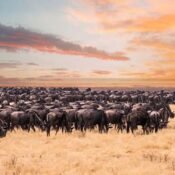
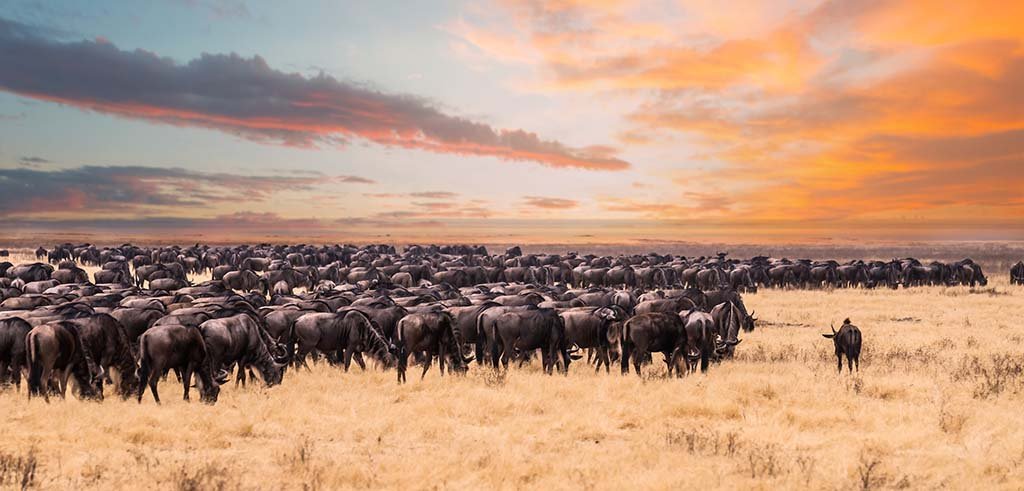
There’s a reason travelers cross oceans just to stand on the Serengeti’s endless plains: the Great Migration is unlike anything else on Earth. Each year, over 1.5 million wildebeest, alongside hundreds of thousands of zebra and gazelle, move in a continuous, dramatic loop across the Serengeti-Mara ecosystem in search of fresh grazing and water.
When to go
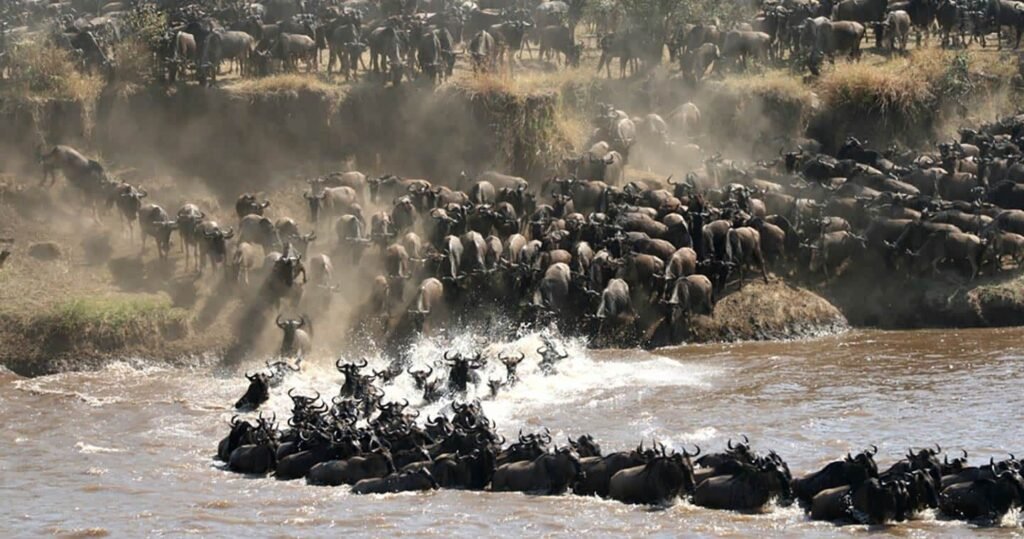
The migration doesn’t follow a strict calendar, but general patterns hold. Calving season runs from January to March in the southern Serengeti, when the plains fill with newborn wildebeest and the predators that follow them. By June and July, the herds push north, culminating in the famous, heart-stopping river crossings at the Grumeti and Mara Rivers, where crocodiles wait beneath the surface.
What makes it unforgettable
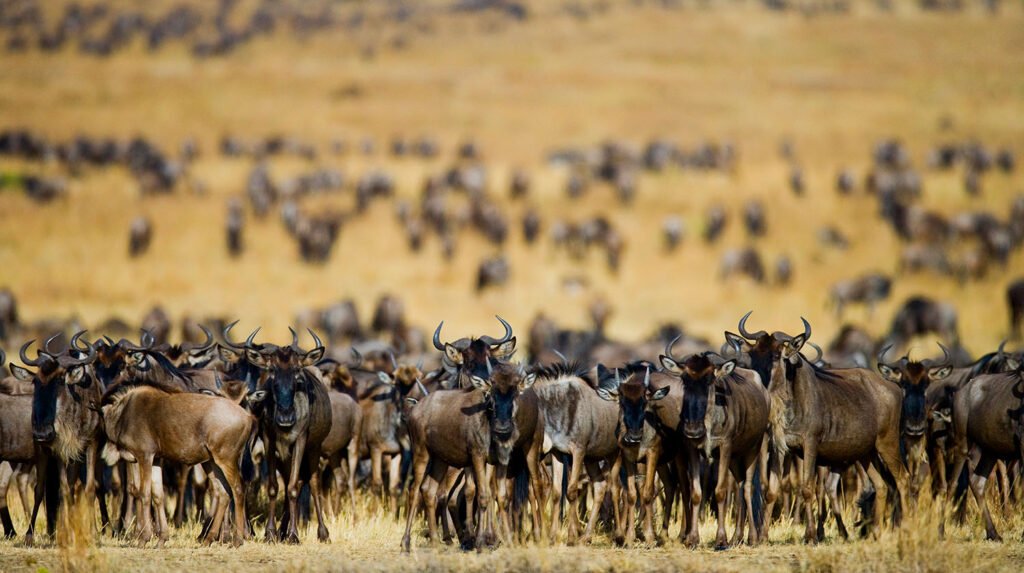
It isn’t just the scale it’s the sound. The rumble of hundreds of thousands of hooves, the constant low grunt of wildebeest, the tension before a crossing. Add golden light breaking over the plains at dawn, and you understand why photographers and first-time safari-goers alike describe it as life-changing.
Planning your migration safari
Timing matters enormously here, and the herds move sometimes unpredictably. A tailor-made itinerary that adjusts to real-time migration patterns gives you the best chance of witnessing a crossing rather than just hearing about one. At Madini Africa Adventure, our guides track herd movements closely so your camp placement and game drives line up with where the action actually is.
The takeaway
The Great Migration isn’t a single event it’s a year-round journey. Whichever month you visit, the Serengeti has a chapter of that story waiting for you.